
How to Turn Your Shopify Store Into a Mobile App (2026 Guide)
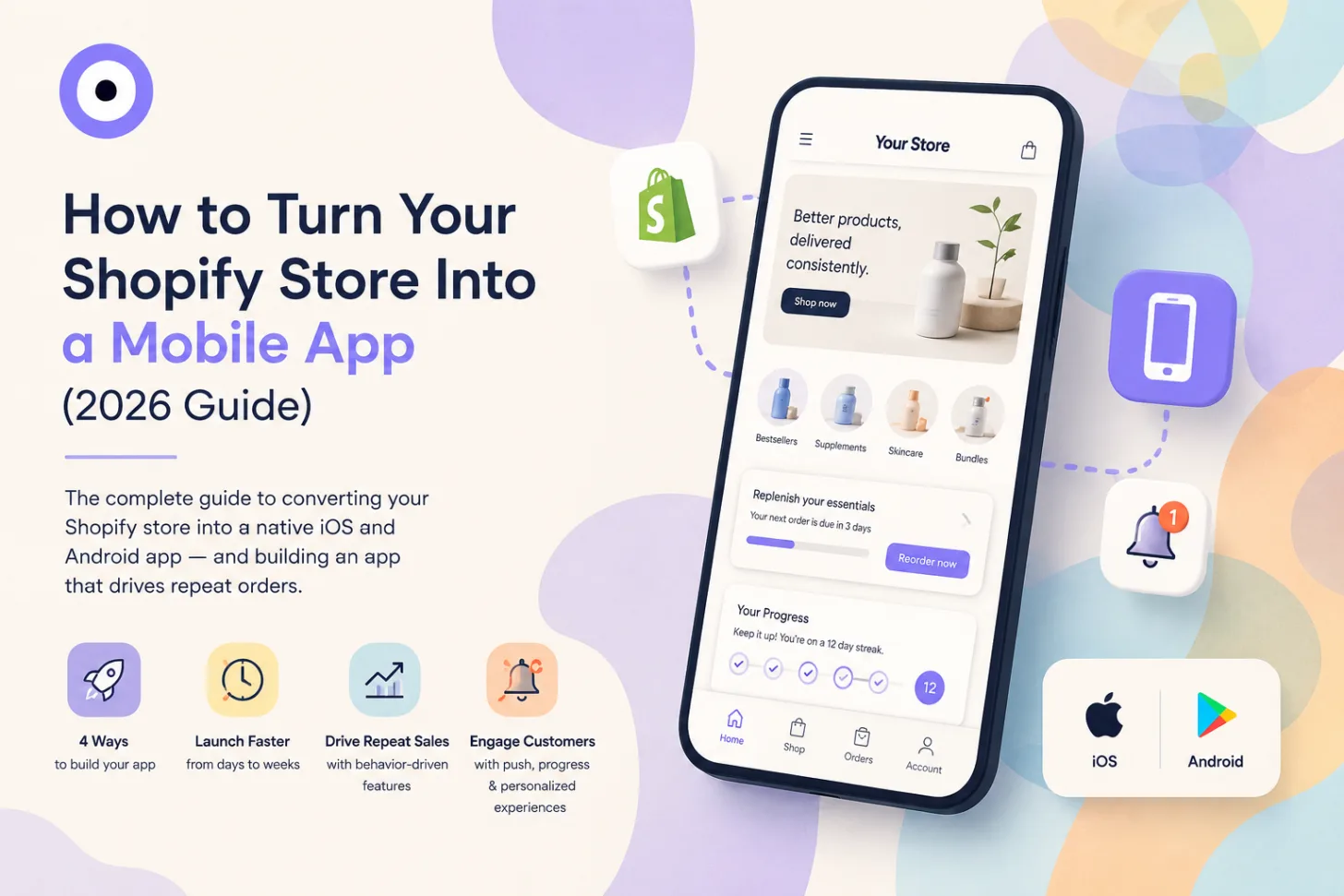
Most of your traffic is already mobile. For a typical Shopify brand, 60–80% of sessions come from a phone — yet that traffic still lands on a mobile website that loads slower, asks customers to log in again every visit, and gives you no way to reach them after they leave. A native app closes that gap. The question isn't really whether to build one; it's which method fits your store and whether the app will actually change customer behavior once it ships.
This guide breaks down every realistic way to turn a Shopify store into an iOS and Android app, what each costs in time and money, and the one thing most "convert your store to an app" articles skip: an app that simply mirrors your website rarely moves the numbers. The apps that pay for themselves are built around how your product gets used.
The four ways to convert a Shopify store into an app
1. No-code app builders
This is how most Shopify brands ship an app today. You install an app builder, connect your store, and your catalog, collections, customer accounts, and checkout sync automatically. Modern builders publish native apps to both the App Store and Google Play, and the better ones can generate a working preview from your store URL before you commit to anything.
Best for: the vast majority of stores that want a real native app without an engineering team. Time to launch: days to a few weeks. Tradeoff: quality varies enormously between builders — more on that below.
2. App wrappers (WebView apps)
A wrapper takes your existing mobile website and embeds it inside a native shell. It's fast and cheap, but the experience is essentially your website in a frame. You get app-store presence and push notifications, but you miss most of the speed and native-feel advantages that make customers prefer apps in the first place.
Best for: brands that want an app-store listing with minimal effort and don't need native performance. Tradeoff: Apple has historically rejected thin wrappers that add little beyond the website.
3. Custom development
Hire a developer or agency to build a bespoke app. You get total control, but you pay for it — both upfront (often tens of thousands of dollars) and forever, since every iOS and Android update, every new feature, and every bug fix needs engineering time.
Best for: enterprise brands with unique requirements and a budget to match. Tradeoff: the slowest and most expensive path, with ongoing maintenance as a permanent line item.
4. Progressive Web Apps (PWAs)
A PWA is an installable, app-like version of your website that runs in the browser. It's the lightest option, but it isn't a true native app: discovery through the App Store and Play Store is limited, push support is inconsistent on iOS, and it won't deliver the native performance customers now expect.
Best for: stores testing the waters before investing in a native app.
How to build one with a no-code app builder (step by step)
For most brands, a no-code builder is the right answer. Here's the process:
- Choose a builder. Look for native iOS and Android publishing, real-time sync with your Shopify catalog and customers, and — critically — features that drive repeat usage, not just a storefront clone.
- Connect your store. Authorize the app to pull your products, collections, customer accounts, and orders. Sync usually takes an hour or two depending on catalog size.
- Preview before you commit. The best builders generate a working version of your app from your store URL so you can see it on a real device first.
- Customize branding and layout. Match your brand, set up your home screen, and configure the flows your customers will actually use.
- Publish. Submit to the App Store and Google Play. Some builders handle submission and the developer accounts for you.
Will a mobile app actually increase your sales?
Here's the uncomfortable truth. You can convert your Shopify store into an app in 48 hours and still see almost no lift — because a storefront in an app is still just a storefront. Customers don't churn because your website is ugly. They churn because they buy once, never build a routine around the product, and forget you exist until a discount email pulls them back.
The apps that actually grow a brand do three things a website can't:
- Encourage consistent usage — they turn a product you buy once into something customers engage with regularly.
- Show progress — tracking, streaks, and feedback reinforce the behavior that leads to reordering.
- Trigger reorders at the right moment — replenishment and upsells fire when a customer is actually running low, not on a generic email cadence.
That's the difference between a mobile storefront and a behavior-driven app. Before you pick a tool, decide which one you're actually building.
Which Shopify app option should you choose?
If you're an enterprise brand with bespoke needs and budget, custom development gives you total control. If you just want a cheap app-store listing, a wrapper or PWA will do. But if you're an operator who cares about lifetime value and wants an app that turns one-time buyers into repeat customers, a no-code builder designed around retention — not just storefront replication — is the fastest path to something that actually pays for itself.
Want to see what a behavior-driven version of your store would look like? Drop your Shopify URL into Fastshot and get a free working app preview in 48 hours — no card, no engineering, no commitment.
Frequently asked questions
Does Shopify have its own native shopping app for my store? No. Shopify offers the Shop app and the merchant admin app, but it doesn't generate a branded, store-specific app for your customers. That's what app builders are for.
How long does it take to turn a Shopify store into an app? With a no-code builder you can have a working preview in a day or two and be live in the app stores within a few weeks. Custom builds take months.
Do I need coding skills? No. No-code builders handle the sync, the native build, and often the app-store submission for you.
Will an app really increase my sales? Only if it changes behavior. An app that mirrors your website tends to underperform; an app built around usage, progress, and well-timed reorders is what drives repeat purchases and higher lifetime value.
See your app before you commit
Drop your Shopify store URL into Fastshot and get a free working app preview — built around your retention loop — in 48 hours. No card, no engineering.
Get my free preview →