
Mobile App vs Mobile Website: Which Converts Better for Ecommerce?
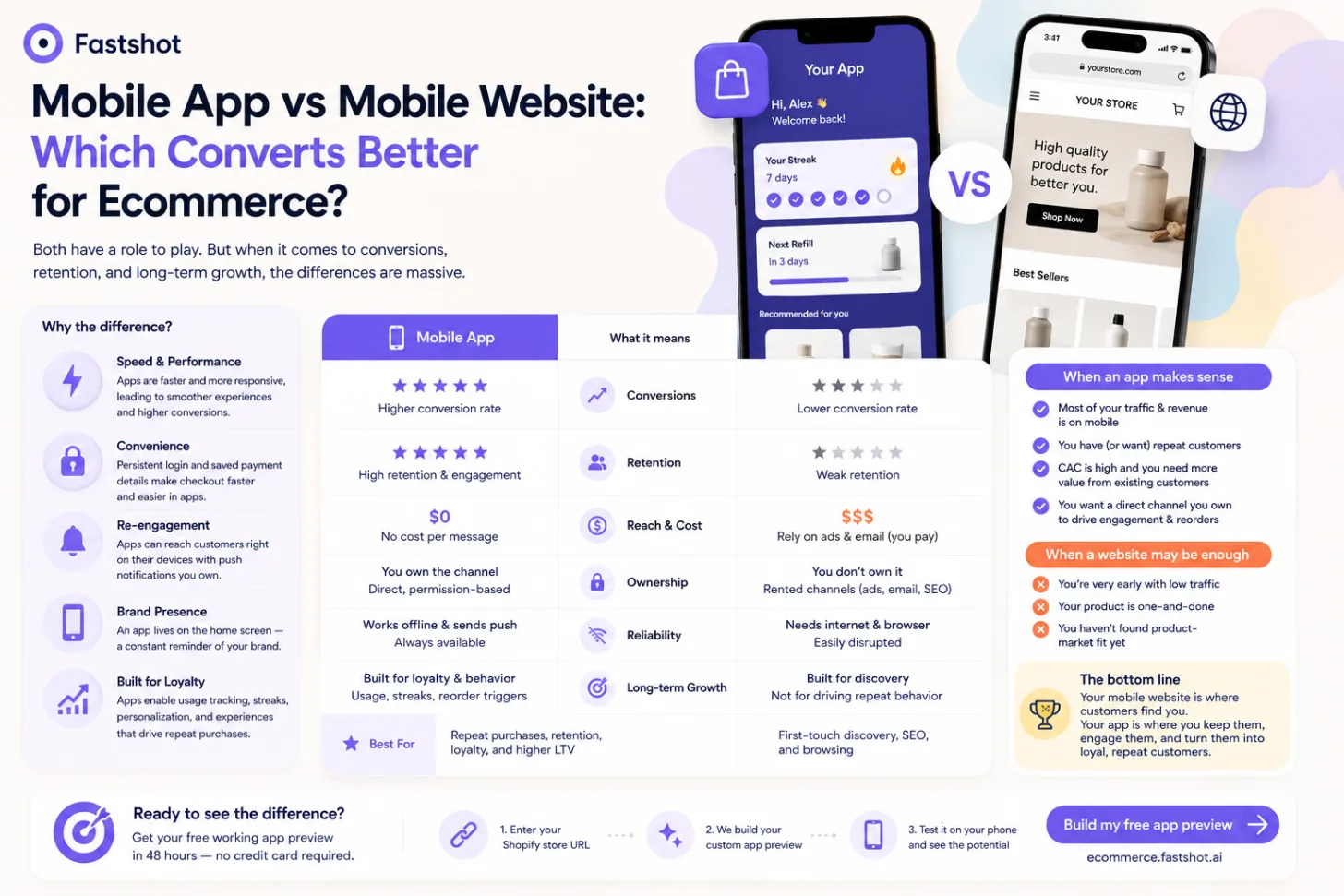
Almost all of your traffic is on phones — for most Shopify brands, 60–80% of sessions. So the mobile experience isn't a side question; it is the business. Which raises the obvious one: should you keep investing in your mobile website, or build a native app? And does an app actually convert better, or is it just a shiny line item?
Here's a straight comparison across the dimensions that matter, plus a framework for deciding whether an app is worth it for your store.
Conversion: the app advantage is real
On a like-for-like basis, native apps tend to convert better than mobile websites — often substantially. The reasons are structural, not cosmetic:
- Speed. Native apps load fast and feel instant. Mobile sites fight load times, and every second of delay costs conversions.
- Persistent login and payment. App users stay logged in, with payment details ready, so checkout is a tap rather than a form. Mobile-web shoppers re-authenticate and re-enter details constantly.
- Fewer distractions. An app is a focused environment. A mobile browser is full of tabs, back buttons, and exits.
Add it up and the same shopper, given the same intent, completes a purchase more often in an app than on a mobile site.
Retention and engagement: apps vs websites
Conversion is where apps edge ahead. Retention is where they win outright. A mobile website has no way to reach a customer once they've left — you're dependent on ads and email to pull them back, and you re-pay for that attention every time. An app flips the relationship:
- It lives on the customer's home screen, a permanent brand presence.
- It can send push notifications — a channel you own, with engagement many times higher than email and no per-message cost.
- It can be built around a usage loop that brings customers back on their own.
This is the dimension most "app vs website" comparisons underweight. A website is a place customers visit occasionally. An app is something they can use regularly — and regular usage is what drives repeat purchases.
Cost and effort: the website's edge
The honest case for the mobile website is cost. Your responsive site already exists, it's included in Shopify, and there's nothing extra to maintain. A native app is an additional asset — though that calculus has changed. Custom app development still runs into the tens of thousands of dollars plus ongoing maintenance, but no-code app builders have collapsed the cost and timeline. You can now get a working app live in days rather than months, without an engineering team.
So "apps are too expensive" is increasingly outdated. The real question isn't cost — it's whether you'll get enough return to justify even a modest investment.
Mobile app vs website: side-by-side
| Mobile website | Native app | |
|---|---|---|
| Conversion rate | Lower (load times, re-login, distractions) | Higher (fast, persistent login, focused) |
| Retention | Weak — no way to reach customers after they leave | Strong — home-screen presence + push |
| Reach after the visit | Ads & email (re-paid each time) | Owned push channel |
| Upfront cost | None (already included) | Low with no-code builders; high if custom |
| Best at | First-touch discovery, SEO, low-commitment browsing | Repeat purchases, loyalty, engagement |
When is a mobile app worth it for ecommerce?
An app isn't right for every store. Use this quick test:
An app makes sense if:
- A large share of your traffic and revenue is already mobile.
- You have (or want) repeat customers — consumables, routines, replenishables, anything bought more than once.
- Your acquisition costs are high and you need to get more value from existing customers.
- You want a direct channel to customers instead of renting attention through ads.
An app may be premature if:
- You're very early, with little traffic or a tiny catalog.
- Your product is genuinely one-and-done with no natural reorder.
- You haven't yet nailed product-market fit on your core store.
For most established Shopify brands, the first list wins. The mobile website remains essential for discovery and first-touch — but it can't be your retention engine, because it can't reach customers after they leave or change how they use the product.
App or website: which should you build?
It's not really app versus website. Your mobile site is where customers find you; an app is where you keep them. The site converts first-touch traffic and carries your SEO; the app drives the repeat purchases that determine whether the business compounds. If a meaningful share of your customers could become repeat buyers, an app is no longer a luxury — and it no longer requires a big budget to find out.
See what a native, behavior-driven version of your store would look like: drop your Shopify URL into Fastshot for a free working preview in 48 hours.
Frequently asked questions
Do apps really convert better than mobile websites? Generally yes, on a like-for-like basis — driven by faster load times, persistent login, app-ready payment, and a more focused environment. The exact lift varies by store.
Should every Shopify store have a mobile app? No. Apps pay off most for brands with meaningful mobile traffic and repeat-purchase potential. Very early stores or genuinely one-and-done products may not need one yet.
Will an app replace my mobile website? No — they do different jobs. Your website handles discovery, SEO, and first-touch shoppers; the app drives retention and repeat purchases. The best brands run both.
See your app before you commit
Drop your Shopify store URL into Fastshot and get a free working app preview — built around your retention loop — in 48 hours. No card, no engineering.
Get my free preview →