
Won't Push Notifications Just Annoy My Customers?
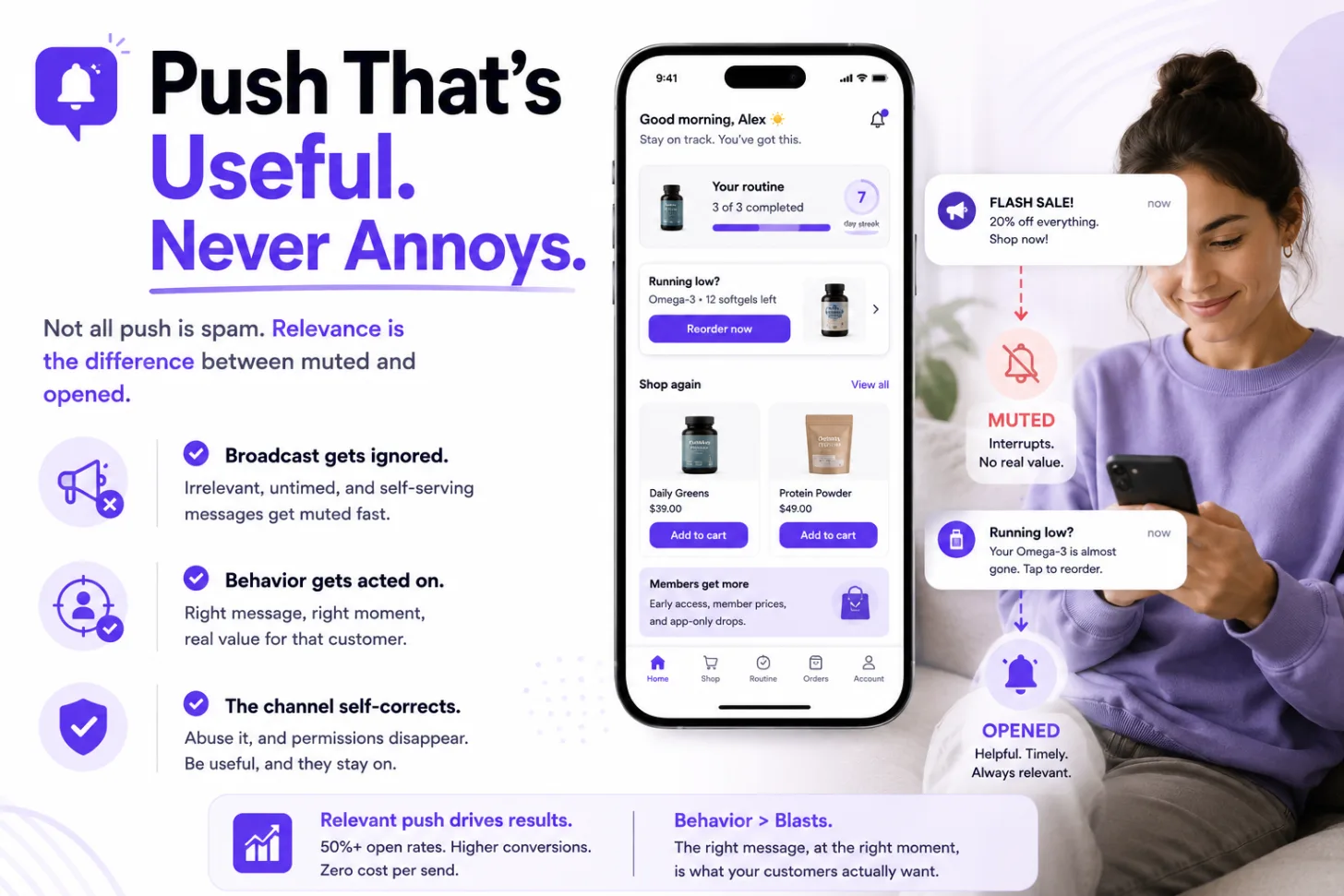
If the thought of sending push notifications makes you wince, that's a good sign — it means you've been on the receiving end of bad ones. Nearly every operator weighing a mobile app asks some version of this question, and they're right to. Push done wrong is exactly the spammy interruption you're picturing, and it'll burn the channel fast.
But "push annoys people" and "push done badly annoys people" are two different claims, and the gap between them is the whole reason push works beautifully for some brands and gets switched off for others. Here's the distinction that decides which camp you land in.
The worry is legitimate — most push is annoying
Concede the point first, because it's true. Most of the push you've personally received earned the eye-roll: the generic "we miss you" nudge, the third flash-sale alert of the day, notifications about things you never cared about. That's the default way brands use push, and it's genuinely bad.
So if your mental model of push is "another firehose of marketing interruptions," you're not wrong about the common case. You're just describing one way of using the channel — the wrong one.
Why broadcast push gets muted
The annoying kind has a name: broadcast. One message, blasted to your entire list, on the brand's schedule, regardless of whether it's relevant to the person receiving it. It's the push version of the email blast, and it fails the same way — irrelevance trains people to ignore the channel, then mute it.
Except push has higher stakes than email. An ignored email just sits in a graveyard inbox. An annoying push gets your notification permission revoked — and unlike an email unsubscribe that a customer might reverse, a revoked permission is effectively gone. Broadcast push doesn't just underperform; it actively destroys the channel.
The difference: behavior-triggered push
The push that doesn't annoy is triggered by something the customer actually did or needs. They're running low on a product they reorder. A step in their routine is due. A streak is about to break. The item they wanted is back in stock. These get opened and acted on because they're useful at that exact moment — they read as service, not marketing.
That's the whole shift: behavior, not blasts. The notification isn't "here's a promo we're running." It's "here's the thing you need, right when you need it." Same channel, completely different relationship with the customer. (This is the same usage loop that separates a retention app from a storefront.)
Push has a built-in correction that email doesn't
Here's the part that should actually reassure a skeptic. Push is opt-in twice over: the customer had to install your app and grant notification permission. They explicitly chose to hear from you. And the moment you abuse it, they revoke it — instantly.
That sounds like a risk, but it's really a safeguard. It means the channel polices itself. You can't spam your way to a big push audience the way someone can buy or scrape an email list, because relevance is the only thing that keeps permissions switched on. The incentives are aligned: the channel rewards usefulness and punishes noise, automatically.
What the numbers actually look like
When push is relevant, the engagement gap over email is not subtle. Operators commonly report push open rates north of 50%, against the 15–20% range email has drifted into — because a behavior-triggered notification arrives at a moment of real need, and costs nothing per send. (Here's the fuller push-vs-email-vs-SMS comparison.)
The caveat matters, though: those numbers belong to behavior-based push. Blast push erodes toward email-level engagement and then past it, as permissions get pulled. The headline stats are earned by relevance, not by the channel itself.
How to use push without annoying anyone
In practice, staying on the right side of the line comes down to a few rules:
- Trigger on behavior, not the calendar. Depletion, routine steps, restocks, streaks — not "it's Tuesday, send something."
- Value over volume. Every notification should be useful to the specific person getting it. If it isn't, don't send it.
- Segment ruthlessly. Relevance is the entire game; a message that's perfect for one customer is spam to another.
- Let the product loop set the cadence, not a marketing calendar.
Do that, and push becomes the rare channel customers don't mute — because you've never given them a reason to. (It's also why retention is a product problem, not a channel problem.)
Want to see what behavior-triggered push would look like for your store? Drop your Shopify URL into Fastshot for a free working app preview — with push tied to your product's usage loop, not a blast calendar — in 48 hours.
Frequently asked questions
Do push notifications actually annoy customers? Broadcast push does — generic, frequent, irrelevant blasts. Behavior-triggered push (running low, routine due, back in stock) doesn't, because it's useful at the moment it arrives. The channel isn't the problem; how it's used is.
What's a good push open rate for ecommerce? Operators commonly report behavior-based push open rates above 50%, versus roughly 15–20% for email. Blast-style push performs far worse and degrades over time as customers revoke permissions.
How often should I send push notifications? As often as you have something genuinely relevant to that specific customer. Let behavior — depletion, routines, restocks — set the cadence rather than a fixed marketing schedule.
Can customers turn push notifications off? Yes, instantly and effectively permanently, which is exactly why relevance matters. That opt-in dynamic is also a safeguard: it forces the channel to stay useful or lose access.
See your app before you commit
Drop your Shopify store URL into Fastshot and get a free working app preview — built around your retention loop — in 48 hours. No card, no engineering.
Get my free preview →